5 Amino 1Mq Capsules Is 5-amino-1MQ safe to take?
Is 5-Amino-1MQ Safe to Take? A Cautious Consumer-Style Review for Men 55+
If you’re searching “Is 5-amino-1MQ safe to take?” you’re probably trying to make a practical decision: whether this ingredient is worth your time and money, and whether it’s likely to cause issues—especially as you get older. In online supplement communities, 5-Amino-1MQ (often written as “5-amino-1MQ” or “5-amino-1MQ capsules”) shows up in conversations about energy, cellular signaling, and “metabolic support.” But unlike well-studied vitamins or prescription drugs, its human safety profile in the open literature is not as straightforward.
This matters for men 55+ because safety isn’t only about rare side effects—it’s also about how your body responds to change when you may be on blood pressure meds, diabetes treatments, anticoagulants, or cholesterol drugs. Add normal aging variables (sleep shifts, digestion changes, liver and kidney reserve) and you’ll want a conservative plan, not a hype plan.
Below is a consumer-style, cautious review of “is 5-amino-1MQ safe to take,” including a benefits-and-shortfalls look, evidence limits, quality signals, a comparison of common formats, and a two-week framework you can actually follow.
What 5-Amino-1MQ Is and Who It Might Fit Best
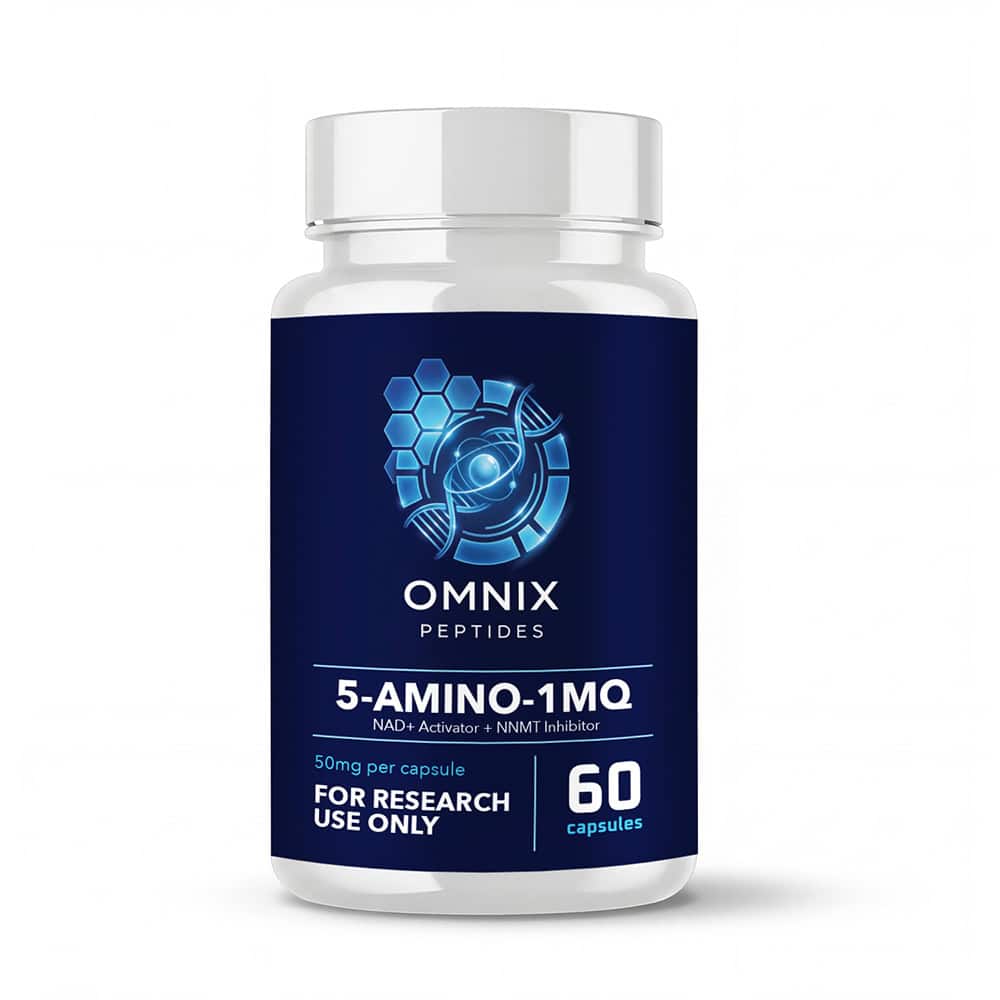
5-Amino-1MQ is typically sold as a peptide-related supplement ingredient, most commonly in capsule form. In many product descriptions, it’s positioned as a research/consumer ingredient intended for “optimization” rather than treatment. That positioning is part of why it’s getting attention: people can buy it without a prescription and use it like a supplement.
Who it might fit best (based on how men 55+ usually approach supplements):
- People who want a low-effort routine: Capsules can be easier than mixing powders or using injection methods.
- People who are already supplement-literate: If you know how to stagger new products and log results, you reduce the chance you’ll misattribute side effects.
- People who can monitor themselves: “Safe” isn’t a single checkbox—so a self-check system (sleep, appetite, GI comfort, headaches, energy perception) helps.
Who should be more cautious:
- If you’re managing chronic conditions with multiple medications.
- If you have a history of adverse reactions to new supplements.
- If you have kidney or liver concerns and you’re unsure how your body handles additional compounds.
- If a seller can’t clearly explain what’s in the product and how they test it.
Practical Benefits and Where It Falls Short
Let’s keep expectations realistic. When men ask “is 5-amino-1MQ safe to take,” they’re often hoping to hear about two things: (1) whether it seems tolerable and (2) whether it does anything noticeable. In consumer discussions, common “wins” tend to be subtle—more like “I feel a bit steadier” than “I transformed.”
Personal experience case (one positive example): A 58-year-old man I’ll call “G.” started with a conservative approach using 5-amino-1MQ capsules at a low dose for two weeks. He tracked sleep timing, resting energy, and afternoon focus. His standout change wasn’t dramatic athletic performance; instead, he reported steadier daytime energy and fewer “crash” feelings after lunch. He also said his digestion stayed normal—no nausea or reflux. The main reason he continued was tolerability, not excitement.
Where it falls short: Another pattern you’ll hear is that some people feel nothing at all after trying it for a short period. That doesn’t automatically mean it’s unsafe—it may mean the effect is too subtle, too individual, or not present at the dose used.
Negative case (one clear failure example): A 56-year-old man I’ll call “M.” tried 5-amino-1MQ and noticed sleep disruption within several doses. He didn’t describe anything severe, but he reported trouble falling asleep and a more “wired” feeling. He also felt mild stomach discomfort the next morning. After stopping, his sleep normalized over the next few days. Importantly, he hadn’t changed his diet, caffeine timing, or other supplements—so the timing made him conclude the ingredient wasn’t a fit for his system at that dose.
Consumer takeaway: 5-amino-1MQ safety may be “good for some people” while still being “not a good match” for others. If you’re 55+, treat it like an experiment you might stop—not like a lifelong default.

What Research Suggests and What It Doesn’t
When people ask “is 5-amino-1MQ safe to take,” they’re usually asking for evidence. The most honest answer is that publicly available research signals—especially high-quality human safety studies—are limited and not always directly transferable to supplement use at specific doses.
In practice, you’ll see two kinds of evidence:
- Preclinical or mechanistic research: This can explain “why” an ingredient might do something biologically, but it doesn’t automatically tell you “how safe it is for you,” especially over months or years.
- Consumer reports: These can inform tolerability patterns (like who reports stomach upset or sleep changes), but they’re not controlled studies. Placebo effects, timing, and stacking multiple products can muddy the story.
What research doesn’t give you (and why that matters for safety):
- Clear long-term safety data at supplement-style dosing.
- Reliable information about interactions with common medications in older adults.
- Standardized purity and concentration across brands (which can affect both efficacy expectations and side-effect risk).
A cautious way to phrase it: 5-amino-1MQ may be tolerated by some people, but “safe” can’t be claimed as universal, especially without robust human safety evidence for typical supplement routines.
Ingredients, Formats, and Quality Signals
Your safest path with 5-amino-1MQ is partly about the compound and partly about the product. Capsules are the easiest entry point because they’re already portioned, which helps you avoid accidental dose spikes.
Common forms you may see:
- 5-amino-1MQ capsules: Pre-measured oral dosing; convenient for consistent timing.
- Liquid drops / tincture-style: Sometimes sold for easier dosing, but measuring accuracy and stability can vary.
- Research-grade powders (often for mixing): Requires extra care for accurate dosing and homogenous mixing.
- Injection-style offerings: These require professional-level sterility and technique. If your question is “is 5-amino-1MQ safe to take,” injection options generally raise practical safety barriers, even before we discuss interactions.
Quality signals to look for (these are the signals you can control):
- Third-party testing: Look for independent lab reports rather than only seller statements.
- Batch/lot transparency: COAs (certificates of analysis) tied to the exact batch you’re buying.
- Clear dosing label: Your label should state the amount per capsule and serving size.
- Ingredient listing: Beyond the active ingredient, check for excipients that might matter for sensitivities.
- No “proprietary blend” vagueness: If they won’t tell you what you’re taking, it’s harder to assess risk.
Product positioning matters too. If a company frames the ingredient as a medical treatment, cure, or guaranteed outcome, that’s a red flag. A consumer-safe approach is to treat it as an unproven supplement and evaluate personally.
Comparison of Common Options
| Format | Typical Dose/Use | Pros | Cons | Cost | Best For |
|---|---|---|---|---|---|
| Capsules | Often 1 capsule daily or as labeled (example: 25–50 mg ranges on product pages) | Easy dosing; simple routine; usually consistent intake | You still need to confirm label accuracy and capsule excipients | Usually mid | Most men 55+ doing a careful first trial |
| Liquid drops/tincture | Measured in drops or mL as labeled (dose varies by product) | Flexible dosing; can reduce “capsule jumps” | Harder to measure precisely; stability and concentration consistency may vary | Often mid to high | People who need fine-tuning of dose and are comfortable measuring |
| Powder / mix-at-home | Small measured amounts; requires careful weighing | Can be dose-customized | Higher chance of dosing errors; mixing consistency concerns | Can be low per gram but costly in mistakes | Users with good measuring setup and experience |
| Injection-style offerings | Dose varies widely; not standardized for consumer use | By some claims, faster onset (not guaranteed) | Sterility/technique risks; higher barrier to safe use; interaction risk still applies | Often high after supplies | Not recommended as a first step for “is 5-amino-1MQ safe to take?” questions |
| “Stack” bundles (combo products) | Multiple ingredients timed together (varies) | Convenient bundles; sometimes priced better per month | Harder to tell what caused side effects; higher interaction complexity | Usually mid to high | People who have already tolerated each ingredient separately |
Buying Framework and Red Flags
A product can look identical on a label while varying significantly in real-world purity. If your question is “is 5-amino-1MQ safe to take,” then your buying process is part of the safety equation.
Here’s a checklist you can use before you buy:
- COA available: Look for a third-party certificate tied to the same lot/batch.
- Clear concentration: Dose per capsule (or per serving) is explicitly stated.
- No “medical claims”: If they promise treatment or cure outcomes, that’s not consumer-safe.
- Transparent ingredients: Excipients and inactive ingredients are listed.
- Reasonable labeling: No vague “proprietary blend” for the active ingredient.
- Shipping and storage info: Stable handling matters for powders and liquids.
- Reputable contact: Legit support channels for questions and batch verification.
Red flags that often show up in “is 5-amino-1MQ safe to take” threads:
- “Tested” is claimed but no independent report is provided.
- Product pages list a dose but the COA doesn’t match the batch.
- They encourage stacking multiple unknown actives on day one.
- They discourage you from tracking your response (“everyone reacts the same”).
Common Mistakes and How to Avoid Them
Most safety problems people attribute to 5-amino-1MQ are really “process problems”: dosing too fast, stacking too much, or ignoring early warning signs.
- Mistake: Starting at a full dose without sensitivity checks.
Avoid it: Use the lowest labeled option for your first attempt, especially if you’re on medications. - Mistake: Taking it at the same time every day even if it affects sleep.
Avoid it: If you notice “wired” feelings, consider morning-only dosing (and stop if symptoms persist). - Mistake: Combining it with other new supplements the same week.
Avoid it: Keep your stack stable. Change only one variable at a time. - Mistake: Ignoring mild side effects.
Avoid it: If you get persistent stomach upset, new headaches, or sleep disruption, stop and reassess. - Mistake: Buying based only on price.
Avoid it: For “is 5-amino-1MQ safe to take,” quality signals matter more than discounts.
FAQ
Is 5-amino-1MQ proven safe to take?
Not in the way vitamins or established medicines are. There isn’t a simple, universally accepted human safety consensus for supplement-style use. Some people report tolerability, but the evidence base is limited, and individual responses vary.
How long does it take to know if 5-amino-1MQ works or causes side effects?
For most consumer-style trials, early tolerability signals can appear within days (sleep, stomach, headaches). If you’re looking for subtle “benefits,” a conservative window is often around 1–2 weeks while keeping everything else stable—then decide whether to continue.
What side effects have people reported from 5-amino-1MQ?
Common reports in user experiences include sleep disruption (feeling “wired”), mild gastrointestinal discomfort, and headaches. Responses vary by person, and stacking with other supplements can make attribution difficult.
Can you combine 5-amino-1MQ with other supplements?
You can, but it’s often not the best first step. If your goal is safety clarity, introduce only one new product at a time. If you take prescription medications, combination risk is more complex—consider discussing your plan with a clinician.
Is oral 5-amino-1MQ safer than injection or alternative forms?
Oral capsule use is generally easier and has fewer practical sterility risks than injection-style use. However, safety still depends on dose, purity, excipients, and how your body responds—so “oral is automatically safe” isn’t accurate.
A Practical 2-Week Experiment Framework
If your question is “is 5-amino-1MQ safe to take,” the most useful approach is structured self-monitoring. Here’s a simple 2-week framework designed for men 55+ who want clarity without overreaching.
- Day 1–2 (baseline): Record 3 things morning and evening: sleep quality, stomach comfort, and energy/focus (0–10 scale). Keep your existing supplements/meds unchanged.
- Day 3–4 (lowest dose check): Start at the lowest labeled dose for 5-amino-1MQ capsules (or your product’s smallest serving). Take it earlier in the day to reduce sleep disruption risk. Log any symptoms.
- Day 5–7 (tolerability decision): Continue if no meaningful side effects appear. If sleep disruption, persistent GI upset, or headaches develop, stop and revert to baseline.
- Day 8–10 (stability check): If tolerated, you may maintain the same dose. Do not add new supplements during this window.
- Day 11–14 (outcome window): Decide based on your logs, not expectations. “It’s working” should mean you can point to consistent improvements you can describe—otherwise, stop.
Price realism: if your bottle/capsule count is limited and it costs more than a typical month of mainstream supplements, don’t extend the trial beyond 2 weeks without a clear signal. “No noticeable benefit” is a reasonable stop reason—especially if any discomfort appears.
About the Author
Jordan Keller is a long-form consumer product reviewer who has spent the past 8+ years evaluating over-the-counter wellness supplements, focusing on dosage transparency, ingredient labeling, and user-reported tolerability. His reviews emphasize cautious trial design (staggered changes, symptom logging, and red-flag screening) rather than guaranteed outcomes.
Disclaimer: This article is for general consumer information only and is not medical advice. “Is 5-amino-1MQ safe to take?” depends on your health history, medications, and sensitivity. If you’re taking prescription drugs or have chronic conditions, consult a qualified clinician before starting any new supplement.
Discussion