Vitamin B12 Injections 5 Benefits of B12 Injections
5 Benefits of B12 Injections: A Practical, Cautious Review for Men 18–24
“5 benefits of B12 injections” keeps showing up in search results because B12 sits at the intersection of energy talk, gym culture, fatigue worries, and the very practical question of absorption. If you’re a man in the 18–24 range, it’s common to see B12 discussed alongside pre-workouts, sleep schedules, vegetarian/vegan diets, and the occasional late-night binge of coffee and convenience foods. You may also have felt the “why am I tired again?” loop after changes in diet, stress, or training volume.
Here’s the consumer-level reality: B12 injections aren’t a performance hack for everyone. They’re most relevant when you’re actually low (or at risk of being low), such as certain dietary patterns, medication side effects, gut absorption issues, or symptoms that align with deficiency. The interest is justified—but the expectations need restraint. This article is objective and cautious, like a review you’d trust more than marketing claims. We’ll talk about benefits people report, include both a personal experience case and a negative case, and point out what research suggests (and what it doesn’t) so you can decide whether a product makes sense for your situation.
What 5 Benefits of B12 Injections Is and Who It Might Fit Best
When people search for 5 benefits of B12 injections, they’re usually asking: “What do I get from a shot, who is it for, and how fast will I feel it?” B12 injections deliver cobalamin (vitamin B12) directly, which can be helpful when oral absorption isn’t ideal. Injections are also popular because the dosing is consistent and easy to track.
Who it might fit best:
- People with low or borderline B12 on bloodwork (especially if you have symptoms like persistent fatigue, tingling/numbness, or mouth sores).
- Vegetarian/vegan men who don’t regularly get reliable fortified sources.
- Men using medications that may affect B12 status (for example, some long-term acid reducers or metformin—discuss with a clinician).
- Men who struggle with oral supplements (nausea, forgetfulness, or difficulty maintaining consistent dosing).
- Men recovering from diet changes who want to normalize levels while fixing the root cause (diet, sleep, training load).
Who should be extra cautious:
- If your symptoms are driven by sleep deprivation, depression/anxiety, overtraining, thyroid issues, iron deficiency, vitamin D deficiency, or stress, B12 may not be the missing piece.
- If you already have normal/high B12, additional injections may add cost with limited upside.
- If you’re prone to allergic reactions or have a complex medical history, dosing should be guided by a professional.
Practical Benefits and Where It Falls Short
Let’s get practical. Below are five commonly cited benefits that show up in real-world use of B12 injections. I’ll include what people often experience, plus the failure modes you should expect.
1) More consistent “energy support” when you’re actually low
Some men report that after a short course, they feel less “wired-but-tired” or less dragged down. Importantly, this isn’t guaranteed. If your energy problem is sleep, hydration, caffeine swings, or stress, B12 may not touch it.
2) Reduced fatigue—sometimes
Fatigue is a common symptom people attribute to B12 deficiency. When B12 is the limiting factor, correcting it can help. If your fatigue is mainly from overtraining or low iron, you might feel “mostly the same,” even after injections.
3) Nerve and neurological support
B12 plays a role in nervous system function. People who have tingling, numbness, or burning sensations sometimes look for improvement after addressing deficiency. But nerve-related symptoms can take time, and not every tingling episode is B12-related.
4) Red blood cell support
B12 contributes to normal red blood cell production. When deficiency exists, correcting B12 may help prevent or reverse deficiency-related blood issues. This benefit is more “background” and less like a quick motivational boost.
5) Convenience if oral options aren’t working for you
Injections can be a steady option when daily pills are missed or when oral absorption is questionable. Convenience is real, but it’s not a substitute for diagnosing why you’re low.
Personal experience case (positive, with context):
A friend of mine (mid-20s, gym-goer, mostly omnivore but inconsistent with dairy and meat on a busy schedule) did a lab panel after feeling unusually tired for about 6–8 weeks. His B12 came back on the low side. He chose a common starting product: 1000 mcg injections every few days for a short course. Over roughly 10–14 days, he noticed he wasn’t “foggy” in the afternoons and his workouts felt a bit more stable. He was also improving sleep, so it wasn’t a perfect isolation test—but the timing matched the course, and his symptoms aligned more with deficiency than with burnout.
Negative case (where it didn’t help, and what went wrong):
Another guy I know (19, college stress, inconsistent sleep, lots of energy drinks) tried B12 injections after hearing they help “energy.” His B12 lab was normal, and he didn’t have tingling or mouth sores—he mainly had low sleep quality and anxiety. He took a 1000 mcg shot and expected a quick “click” in his mood and stamina. Instead, he felt the same within a week. He also developed mild acne flare around the injection area and a general “off” feeling for a day. In the end, he got more consistent sleep and addressed iron and vitamin D. The B12 wasn’t the cause—and he essentially paid for a shot that didn’t match his real bottleneck.
Where B12 shots fall short most often:
- You feel “better” for a moment but the driver is still there (sleep, stress, calorie deficit, overtraining).
- Your symptoms are from something else (iron deficiency, thyroid problems, low vitamin D, anxiety, infections).
- You’re already adequate, so the injection doesn’t create a meaningful change.
- The course is too short or the underlying absorption issue persists.

What Research Suggests and What It Doesn't
B12 injections are backed by solid biology: B12 is essential for red blood cell formation and normal neurological function. When people are truly deficient, correcting B12 can improve deficiency-related outcomes. The “cautious” part is the leap from biology to individual outcomes like “more energy,” “better performance,” or “instant recovery.”
What research and clinical practice generally support:
- If you have B12 deficiency or borderline status, treatment can restore levels and improve symptoms over time.
- Some forms and routes (including injections) are used when absorption is compromised.
What research does not guarantee:
- Instant energy for everyone. If you’re not deficient, a shot doesn’t automatically create energy “above baseline.”
- Gym performance improvements. Athletic performance is multifactorial (calories, sleep, training programming, carbs, iron status, stress).
- Fixing nerve symptoms quickly. Nerve-related issues may improve slowly, and some causes aren’t B12.
Risks and realistic limitations (including failure cases):
- Side effects can occur, such as injection site discomfort, headache, nausea, and in some people, acne-like breakouts.
- Overuse can be wasteful at best. If your levels are already adequate, repeatedly injecting is rarely necessary without a medical reason.
- Masking the real cause. If you only treat B12 and ignore sleep, iron, stress, or diet, symptoms can continue.
Practical risk note: If you’re considering injections, use sterile technique and avoid DIY experiments if you’re not comfortable. If you have known allergies, neurological symptoms, unexplained anemia, or persistent fatigue that’s worsening, talk to a clinician rather than trialing blindly.
Ingredients, Formats, and Quality Signals
“B12 injections” is usually shorthand for cobalamin forms in a sterile liquid intended for intramuscular or subcutaneous injection. The main quality signals are less about the “brand name” and more about whether the product is manufactured and labeled with reliability.
Common B12 forms you’ll see:
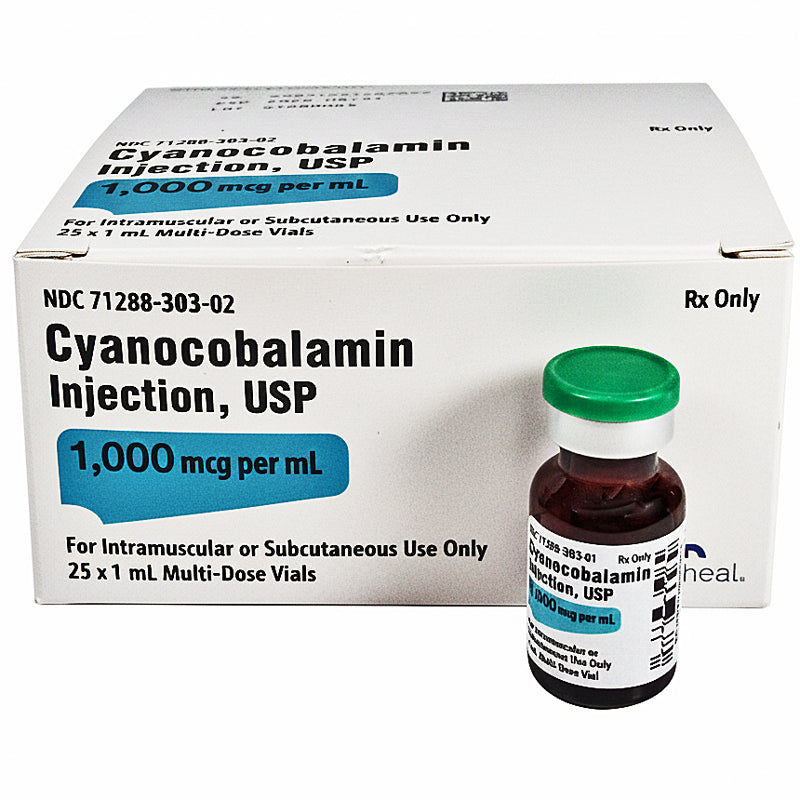
- Cyanocobalamin (often common and cost-effective)
- Methylcobalamin (often marketed for active methylation support)
- Hydroxocobalamin (less common in some markets)
Typical formats:
- Vials (single-dose or multi-dose packaging)
- Pre-filled syringes (more convenient; sometimes higher cost)
Typical dose ranges you’ll see in consumer products:
- 1000 mcg per injection is a frequent starting point in mainstream offerings.
- Some plans use more frequent dosing at first, then reduce frequency.
Quality standards and “signals” to look for:
- Sterile, properly labeled product with batch/lot info
- Clear instructions on route (IM vs subQ) and dosing schedule
- Third-party testing when available
- Reasonable packaging (sealed, not cloudy unless specified)
- Transparent storage instructions (temperature handling matters)
Product choice tip: Match the product form to your goal and any dietary/medical context, but don’t treat the “type” as a magic ingredient. If you’re truly deficient, restoring B12 status is the main lever—not which marketing term you pick.
Comparison of Common Options
| Format | Typical Dose/Use | Pros | Cons | Cost | Best For |
|---|---|---|---|---|---|
| Injection (Cyanocobalamin) 1000 mcg | Often used in short courses; e.g., every few days to weekly depending on plan | Common, widely available, straightforward dosing | May still cause side effects; not a guarantee if you aren’t deficient | $ (varies by brand and quantity) | People who want a budget-friendly, standard starting shot |
| Injection (Methylcobalamin) 1000 mcg | Often similar dosing schedules; marketed as “active form” | Popular choice for those who prefer methylated forms | Often more expensive; form doesn’t replace the need to address root cause | $$ | People who dislike the idea of cyanocobalamin or prefer methylated support |
| Injection (Hydroxocobalamin) | Varies by availability; used in some clinical contexts | Used in certain protocols; can be helpful where appropriate | May be harder to find; still not “instant energy” for everyone | $$ | Situations guided by clinician preference |
| Oral B12 (tablets/sublingual) | Common daily or a few-times-weekly dosing; amount varies widely | No injections; easier for routine supplementation | May be less effective when absorption is the main issue | $ | People with adequate absorption and mild deficiency risk |
| Oral high-dose B12 + absorption enhancers | High microgram to milligram range depending on product; schedule varies | Sometimes a practical alternative if injections aren’t ideal | Cost can rise; still depends on your absorption situation | $$ | Men who want an oral approach but suspect borderline status |
Buying Framework and Red Flags
If you’re buying a product for 5 benefits of B12 injections, think like a careful consumer, not like you’re buying a lottery ticket. Use this checklist before you click “add to cart.”
Buying checklist:
- Purpose alignment: Are you treating confirmed deficiency/borderline status or a specific risk factor (diet, absorption issue), not just general “energy”?
- Dose clarity: Does the label state mcg per injection (e.g., 1000 mcg)?
- Form clarity: Does it specify cyanocobalamin vs methylcobalamin vs hydroxocobalamin?
- Route instructions: Are IM vs subQ directions included?
- Sterility and labeling: Is the product sealed, labeled with lot/batch, and stored correctly?
- Quality signals: Any third-party testing details? Any manufacturing transparency?
- Realistic claims: Does the marketing avoid “cure” language and focus on supplementation/deficiency support?
- Price sanity: You’re not buying “miracle energy.” If something is dramatically cheaper, ask what compromises were made (source, quality control, expired stock).
Red flags to avoid:
- Claims that suggest guaranteed results or promises to “fix” fatigue permanently.
- No clear ingredient/form listed.
- Missing sterile manufacturing information or unclear batch/lot details.
- Inconsistent dosing instructions (or instructions that conflict with the packaging).
- Pricing that seems too good to be true without explanation.
Common Mistakes and How to Avoid Them
Here are the mistakes I see most often when men try to use 5 benefits of B12 injections as a quick fix.
- Taking shots without labs: If your B12 is normal, you may waste money and not fix the real driver of fatigue.
- Ignoring other deficiencies: Iron deficiency is common in young adults. Low vitamin D and poor sleep quality are also frequent culprits.
- Changing too many variables at once: If you start a new diet, new training plan, and B12 injections on day one, you won’t know what helped.
- Expecting instant results: Some people notice changes within a couple weeks, but that’s not the rule. If you feel nothing after 1–2 weeks, it may be the wrong bottleneck—not necessarily that B12 “doesn’t work.”
- Overdosing or extending a course blindly: More isn’t automatically better. Follow labeled instructions and consider clinician guidance.
- Using DIY injection practices without comfort or sterility: Injection technique matters. If you’re unsure, get appropriate instruction.
FAQ
Is it proven that B12 injections provide the 5 benefits people talk about?
B12 injections have strong support for correcting deficiency-related issues. The “5 benefits” people mention—like energy support and fatigue reduction—are most plausible when you’re low or borderline. If your B12 status is already normal, evidence for noticeable benefit is weaker, and results vary based on what’s actually causing your symptoms.
How long does it take to notice results after starting B12 injections (including the 5 benefits of B12 injections)?
Some people report changes within 1–2 weeks, but many outcomes—especially nerve-related concerns or deeper deficiency effects—can take longer. A practical window many consumers use is about 2–4 weeks to judge whether the shot is affecting the specific symptoms that led them to try B12.
What side effects are common with B12 injections when trying to get the 5 benefits of B12 injections?
Common reports include injection-site discomfort, headache, mild nausea, and occasional acne flare or skin sensitivity in some individuals. Serious reactions are rare, but if you get rash, swelling, severe dizziness, or breathing trouble, seek urgent medical help.
Can I combine B12 injections with other supplements or vitamins to support energy and the 5 benefits of B12 injections?
Often, people combine B12 with general multivitamins, vitamin D, or minerals. The cautious approach is to avoid stacking multiple high-dose B vitamins without a reason and to consider key interactions based on your health context. If you take prescription medications or have medical conditions, it’s smart to review the plan with a clinician.
Oral vs injection: Which is better for the 5 benefits of B12 injections or alternatives like oral B12?
If you can absorb oral B12 reliably, oral options may be enough for maintaining adequate levels. Injections can be more appropriate when absorption is impaired or when a clinician has recommended injection therapy. The “better” choice depends on your risk factors, symptoms, and—ideally—your labs.
A Practical 2-Week Experiment Framework
If you’re considering a product for 5 benefits of B12 injections, don’t treat it like a permanent lifestyle change on day one. Treat it like a structured mini-experiment. This keeps expectations realistic and helps you spot whether B12 matches your bottleneck.
Day 0 (setup):
- Pick 2–3 symptoms to track (e.g., afternoon fatigue, workout “drive,” focus clarity).
- Record sleep hours and caffeine intake for context.
- Note current supplements and any recent diet changes.
Days 1–7 (first week):
- Follow the product’s labeled schedule precisely (common consumer courses may include injections spaced across the week).
- Track daily: energy (1–10), motivation (1–10), and any side effects (acne flare, headaches, injection-site discomfort).
- Keep workouts stable—don’t dramatically change training volume.
Days 8–14 (second week):
- Continue the course plan as instructed.
- Look for trend changes, not day-to-day fluctuations.
- If you see no improvement and you had normal B12 labs or no deficiency risk factors, consider stopping and reassessing with a clinician rather than extending blindly.
Decision rule (simple and honest):
- If your specific fatigue/energy symptoms improve alongside a reduction in side effects, keep going only if it aligns with labeled guidance and your deficiency context.
- If not, don’t assume “B12 doesn’t work.” Assume you may be treating the wrong problem, and shift focus to the more likely drivers (sleep quality, iron status, vitamin D, nutrition, training load).
About the Author
Jordan Blake is a health-and-consumer reviewer who has spent several years testing supplement routines in real-world conditions—tracking outcomes, side effects, and adherence in a way that focuses on what a typical customer would notice. Their experience includes writing product comparisons for common wellness categories, evaluating label transparency (dose, form, route instructions), and documenting “failure cases” where people expected energy boosts but the true cause was sleep, iron status, or training stress. This article is for informational purposes and reflects consumer-style observations, not medical treatment advice. If you have persistent fatigue, neurological symptoms, or abnormal lab results, consult a qualified clinician before using B12 injections.
Discussion