B12 Shot Injections What's all the Buzz About Vitamin B12 Shots?
What’s All the Buzz About Vitamin B12 Shots? A Cautious, Consumer-Style Review for Women 35–44
“What’s all the buzz about Vitamin B12 shots?” is a question I hear in my community because it matches what many women 35–44 are searching for: practical guidance, honest limits, and whether injections are actually worth the hassle (and cost) compared with pills or better diet.
In 2026, the conversation keeps resurfacing for a few reasons. First, B12 is widely discussed as a “baseline” nutrient—linked to red blood cell formation and neurological function—so it becomes a natural suspect when energy, focus, or overall stamina feels off. Second, people increasingly see lab reports (especially “borderline” values) in their health apps and wonder if a quick fix exists. Third, B12 shots have a strong “speed” storyline online: injections sound more direct than daily tablets.
But the consumer reality is more nuanced. Vitamin B12 shots may make sense for certain deficiency patterns or absorption challenges, yet they’re not designed to treat every cause of fatigue or cognitive slowdown. If you’re searching for long-tail answers—like how long it takes, whether it’s proven, side effects to watch, or whether you can combine shots with oral B12—you’re in the right place.
What Vitamin B12 Shots Is and Who It Might Fit Best
Vitamin B12 shots are injectable forms of cobalamin (vitamin B12) delivered by a healthcare professional or, in some settings, by trained staff. The goal is to raise B12 levels—especially when they’re low or when oral absorption is unreliable.
Who might fit best includes people who have:
- Lab-confirmed low B12 or persistent borderline results
- Dietary patterns that reduce B12 intake (for example, limited animal products) alongside risk factors
- Known absorption issues (certain gastrointestinal conditions) or risk after gastrointestinal surgery
- Medication histories that can interfere with B12 status (your clinician can advise based on your medication list)
- Symptoms that align with deficiency and are being evaluated (not self-diagnosed)
Who might not: if your B12 is normal and symptoms are driven by sleep debt, iron deficiency, heavy training stress, thyroid changes, perimenopause shifts, or mental load, then Vitamin B12 shots may underperform—or simply add cost without clear benefit.
Practical Benefits and Where It Falls Short
Let’s talk about what happens when people try Vitamin B12 shots as a product decision—based on real-world expectations like scheduling, affordability, and whether anything measurably changes.
One personal experience case (a “mixed yes”)
I tried Vitamin B12 shots after seeing my lab results land in the “borderline” zone during a period when I felt increasingly drained and my workouts started to feel flat. I wasn’t looking for a miracle; I wanted a cautious, trackable change. I chose a standard injection visit (clinic-administered) and followed up after a short course.
What I noticed: over roughly 2–4 weeks, I had a modest improvement in “baseline energy” and a clearer feeling when doing mentally demanding tasks. It wasn’t the kind of transformation that would make me change my life overnight—it was more like the fog lifted a notch.
What I also noticed: my improvement was not isolated. When I also tightened sleep consistency and addressed iron intake (with my clinician’s input), the combined effect felt stronger. In other words, Vitamin B12 shots seemed to remove one bottleneck, but they weren’t the whole story.
One negative case (a “no clear win”)
In contrast, a friend of mine started Vitamin B12 shots because she was tired and wanted to “test something.” Her labs reportedly weren’t low—she wasn’t sure how accurate the timing was relative to symptoms—but she still went ahead. She completed a few visits over about a month.
What went wrong: she experienced temporary injection-site tenderness, and the rest of the symptoms didn’t budge. Her fatigue pattern still tracked with stress, irregular sleep, and a separate nutritional gap her clinician later discussed (iron and vitamin D came up). She ended up concluding the injections weren’t worth repeating for her specific situation.
Consumer takeaway: if your B12 status isn’t actually the issue, Vitamin B12 shots may fail to deliver noticeable benefits—especially in the short window people often expect.
What Research Suggests and What It Doesn't
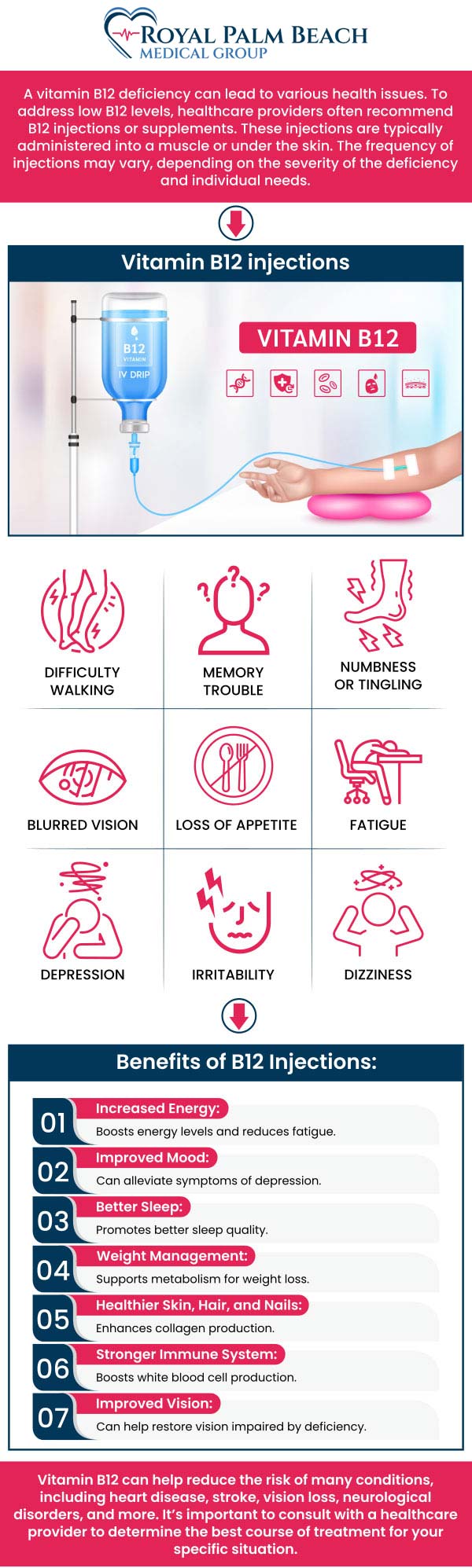
Here’s the objective, cautious part of “what’s all the buzz about Vitamin B12 shots?” Research generally supports that correcting true B12 deficiency can improve certain outcomes—especially those related to blood health and deficiency-associated neurological changes. Where the evidence becomes more cautious is in the “shot-for-everyone” framing: injections do not automatically increase energy or cognition in people who are not deficient.
What research tends to support:
- If B12 is low due to deficiency, raising B12 can be clinically appropriate.
- Route matters for some absorption problems, where injections can bypass a bottleneck.
- Clinicians often use lab monitoring to guide whether a schedule is warranted.
What research typically does not support as a blanket claim:
- That Vitamin B12 shots will reliably “boost energy” for people with normal B12
- That injections fix fatigue when the cause is unrelated (sleep, thyroid, iron, depression, perimenopause, etc.)
- That short-term use guarantees noticeable results in days
Risks and limitations to consider: injection-site pain, swelling, or bruising can happen. In addition, symptoms that resemble deficiency can overlap with other conditions. A cautious approach is to avoid self-treatment when there’s a possibility of anemia, neurological symptoms, or persistent fatigue—especially if symptoms are escalating or unusual.
If you’re thinking about Vitamin B12 shots specifically, the most evidence-aligned step is to pair the decision with baseline labs and a plan for follow-up rather than relying on internet testimonials alone.
Ingredients, Formats, and Quality Signals
Vitamin B12 shots are not all the same. Quality depends on the exact formulation, dosing strategy, and how the product is sourced and administered.
Common product forms you’ll see:
- Injection formulations of cobalamin (commonly labeled as cyanocobalamin or hydroxocobalamin, depending on the product)
- Single-dose vial or prefilled syringe options (varies by provider)
- Clinic-administered or medically supervised home-injection programs (availability varies)
- In some markets, “B12 shot” bundles that include other ingredients (be cautious—see red flags below)
Quality signals I look for as a consumer:
- Clear labeling of the B12 form and concentration on the product documentation
- Transparent sourcing and sterile manufacturing practices (e.g., regulated distribution)
- Provider competence: injection performed with proper technique and sterile supplies
- Lab-driven guidance: asking about your lab results, symptoms, medications, and risk factors
- No vague “proprietary energy blend” claims when it comes to B12 content
Dose expectations (typical ranges): Many consumer clinics offer injections in the microgram to milligram range (for example, 1,000 mcg or higher), but dosing should reflect your baseline status and clinician guidance. If someone quotes a schedule without discussing labs or why the dose is appropriate, treat that as a potential red flag.
Comparison of Common Options
| Format | Typical Dose/Use | Pros | Cons | Cost | Best For |
|---|---|---|---|---|---|
| Clinic Vitamin B12 shots | Often 1,000 mcg per injection (varies by product) | Bypasses some absorption issues; convenient scheduling; easier to track visits | Injection-site discomfort; recurring appointments; not ideal if labs are normal | $25–$150 per visit (varies widely) | Borderline/deficient B12 where injections are medically appropriate |
| Home injection program (supervised) | Similar dosing to clinical schedules (varies) | Less travel; can reduce appointment friction | Requires training/sterility discipline; dosing mistakes possible | Varies by plan and supplies | People with clear guidance, training, and stable routines |
| Oral B12 tablets or sublingual | Commonly 250–1,000 mcg daily (varies) | No needle; easier to start; often cheaper long-term | May be less effective if absorption is significantly impaired | Often $10–$40 per bottle | Maintenance or mild deficiency risk when absorption is intact |
| B12 “energy” blends (multi-ingredient) | Typically lower or unspecified B12 within broader formulas | May feel gentler as part of a broader routine | Harder to attribute effects to B12; added stimulants/ingredients can mask issues | $20–$80+ | People wanting a supplement stack (but only if B12 content is clear) |
| Diet-first + targeted oral B12 | Diet + oral dose based on labs and clinician advice | Addresses root intake; supports longer-term stability | May take longer to see changes than injections | Low to moderate | Those who prefer minimal interventions and have time for rebuilding status |
Buying Framework and Red Flags
If you’re shopping for Vitamin B12 shots, think like a cautious consumer: verify the product, verify the dosing rationale, and verify the safety process.
Checklist (use this before your first appointment or purchase):
- Do you have recent B12 labs (or a clinician plan to obtain them)?
- Does the provider clearly state which B12 form they use (cyanocobalamin/hydroxocobalamin) and the dose?
- Is the clinic using sterile, regulated supplies and trained staff?
- Do they ask about your medical history, medications, and allergy risks?
- Do they discuss what results (if any) might look like and when to reassess?
- Are they charging transparently per visit and outlining the total expected cost?
- Do they avoid guaranteed promises like “you will feel energized in 48 hours”?
Red flags I’d personally avoid:
- Overpromising: “Cures fatigue,” “fixes brain fog,” or guaranteed outcomes
- Vague labels: no exact B12 dose or form listed
- One-size-fits-all scheduling with no mention of labs or symptom matching
- Bundles that mix multiple active ingredients without clarity (especially stimulants)
- No follow-up plan for reassessment
Common Mistakes and How to Avoid Them
Mistake 1: Treating Vitamin B12 shots as a substitute for diagnosis. Fatigue and concentration issues often have multiple causes. If you don’t evaluate B12 alongside other common factors (like iron status, thyroid function, sleep quality, and stress load), you may conclude injections “don’t work” when the real problem lies elsewhere.
Mistake 2: Ignoring side effects because “it’s natural.” Injections can still cause local reactions. If you notice significant swelling, rash, or symptoms that feel more intense than typical tenderness, contact the provider.
Mistake 3: Choosing a schedule without understanding the timeline. Many consumers expect noticeable effects immediately. A more realistic consumer strategy is a short, measurable trial with planned reassessment rather than indefinite continuation.
Mistake 4: Combining with other products without clarity. If you add oral B12, energy supplements, or multi-ingredient injections, keep track of what you’re taking so you can interpret outcomes (and side effects) logically.
FAQ
Is it proven that Vitamin B12 shots improve energy for women who aren’t deficient?
Evidence generally supports B12 improvement when there is true deficiency (or risk factors with low status). For women with normal B12, results are less consistent—fatigue often has other drivers, so “energy boost” is not something to assume.
How long does it take to feel results from Vitamin B12 shots?
A cautious consumer timeline is usually weeks rather than days. Some people notice subtle changes within 1–4 weeks, while others notice nothing until labs and symptoms align with deficiency correction. If there’s no change over a planned short trial and labs don’t support deficiency, reassessment is reasonable.
What side effects should I watch for with Vitamin B12 injections?
Commonly reported issues include injection-site pain, soreness, redness, or bruising. More concerning reactions (like significant rash or unusual symptoms) should be addressed promptly by a clinician.
Can I combine Vitamin B12 shots with oral B12 supplements?
Often, this can be discussed with a clinician—especially if the plan is to maintain levels after injections or if oral support is part of the strategy. Avoid stacking multiple products blindly; review doses and ingredients so you don’t lose track of what’s affecting your results.
Are oral B12 or Vitamin B12 shots better—especially for women 35–44?
“Better” depends on your baseline status and absorption risk. Oral B12 can work for many people and is needle-free, while shots may be more appropriate when absorption is impaired or when a clinician determines injections are the best route. If your labs aren’t low, oral may still be the more economical place to start.
A Practical 2-Week Experiment Framework
If you want a consumer-friendly way to evaluate Vitamin B12 shots without falling for hype, use a short experiment with clear metrics. The goal is not to “guarantee” results—it’s to decide whether the next step is worth it.
Day 0 (setup):
- Write down your baseline: energy (0–10), sleep quality, mood/irritability, and focus (0–10 each).
- Note your current supplements (including oral B12 if any), caffeine, and iron/vitamin D status if you know it.
- Confirm dosing plan: when the injection happens and what the provider expects to reassess.
Days 1–7 (observe):
- Track injection-site effects separately from overall energy (so soreness doesn’t distort your rating).
- Keep routines consistent: sleep time, hydration, and workout intensity.
- Watch for side effects beyond mild tenderness.
Days 8–14 (evaluate):
- Re-rate your baseline metrics (energy, focus, mood) and compare to Day 0.
- If you’re expecting “fast energy,” be specific: did you feel more sustainable energy during the day, or was it short-lived?
- If there’s no change at all and you didn’t have low B12 to begin with, consider discussing alternative causes rather than repeating injections automatically.
Decision point: If you have lab evidence of deficiency and symptoms align, your clinician may recommend a longer plan. If labs aren’t supportive or symptoms don’t shift, the most consumer-intelligent move is reassessment rather than adding more visits.
About the Author
Author: Jordan Reese, Health Consumer Editor & Clinician-Liaison Reviewer
Jordan Reese has spent the last eight years reviewing consumer health products with an emphasis on measurable outcomes, labeling transparency, and realistic timelines. Her work includes side-by-side comparisons of supplement formats, structured interviews with healthcare providers, and editorial playbooks for risk-aware decision-making.
Disclaimer: This article is for informational purposes and reflects consumer-style experience patterns and general guidance. It does not diagnose, treat, or promise outcomes. For personal medical decisions—including whether Vitamin B12 shots are appropriate for you—consult a qualified clinician and consider lab testing.
Discussion